 Skip to content
Uncategorized
Difference Between Scotch, Bourbon, and Rye
Feb
Difference Between Scotch, Bourbon, and Rye
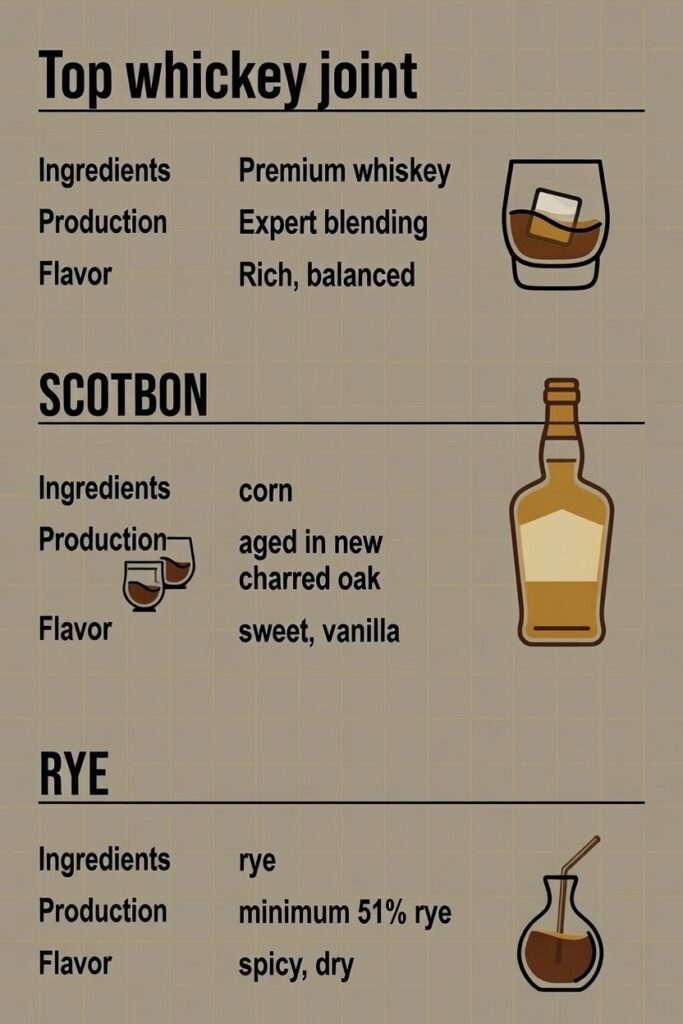
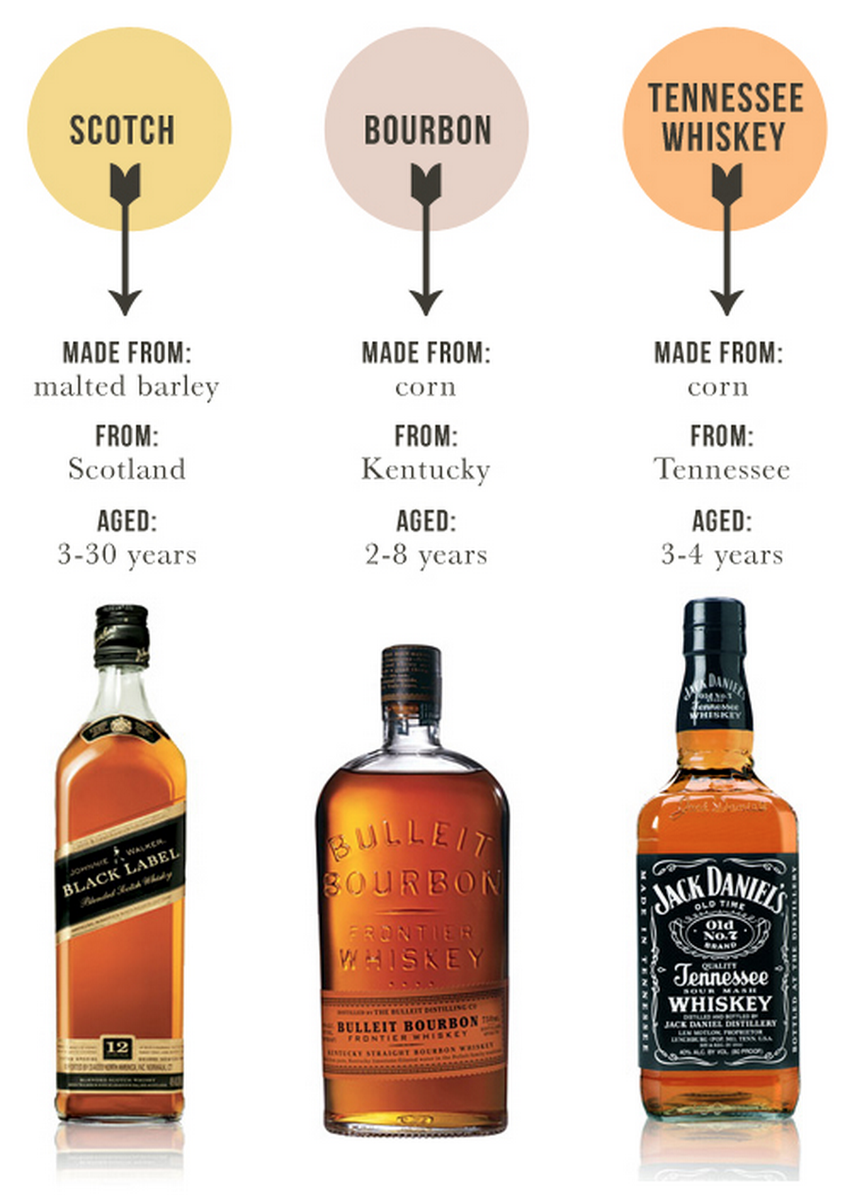
Scotch, bourbon, and rye are all types of whiskey, but they differ in grain recipe, production laws, origin, and flavor profile. Scotch is typically made from malted barley in Scotland and often features smoky or malty notes. Bourbon is an American whiskey made with at least 51% corn, known for sweetness and vanilla flavors, while rye whiskey contains at least 51% rye grain and delivers a spicier, drier taste.
What Is the Difference Between Scotch, Bourbon, and Rye?

The main differences come down to four key factors:
-
Country of origin
-
Primary grain used
-
Barrel aging requirements
-
Flavor profile
| Whiskey Type | Origin | Main Grain | Barrels Used | Typical Flavor |
|---|---|---|---|---|
| Scotch | Scotland | Malted barley | Often used oak barrels | Malty, smoky, earthy |
| Bourbon | United States | 51%+ corn | New, charred oak barrels | Sweet, vanilla, caramel |
| Rye | U.S. or Canada (varies by style) | 51%+ rye (U.S. style) | New, charred oak (U.S.) | Spicy, peppery, dry |
What Is Scotch Whisky?
Scotch whisky must be made in Scotland and follow strict legal standards.
Key Scotch Production Rules
-
Made in Scotland
-
Aged in oak barrels for at least 3 years
-
Distilled below 94.8% ABV
-
No additives except water and caramel coloring (in some styles)
Scotch Grain Base
Most Scotch is made from:
-
Malted barley (single malt Scotch)
-
Or a mix of malted barley and other grains (blended Scotch)
What Does Scotch Taste Like?
Scotch flavors vary widely by region and production style:
-
Peated Scotch: Smoke, iodine, seaweed
-
Unpeated Scotch: Malt, honey, apple, biscuit
-
Sherry-aged Scotch: Dried fruit, nuts, spice
The use of previously used barrels (ex-bourbon, sherry casks) creates layered, complex flavors rather than heavy sweetness.
What Is Bourbon?
Bourbon is a distinctly American style of whiskey defined by federal law.
Legal Requirements for Bourbon
To be labeled bourbon, the whiskey must:
-
Be made in the United States
-
Contain at least 51% corn
-
Be aged in new, charred oak barrels
-
Be distilled to no more than 160 proof
-
Enter the barrel at 125 proof or less
-
Contain no additives except water
Bourbon Flavor Profile
Because of high corn content and new charred barrels, bourbon typically shows:
-
Vanilla
-
Caramel
-
Brown sugar
-
Oak
-
Baking spices
These qualities make bourbon rounder and sweeter compared to most Scotch or rye.
What Is Rye Whiskey?
Rye whiskey is defined primarily by its grain content.
U.S. Rye Whiskey Rules
American rye must:
-
Be made with at least 51% rye grain
-
Be aged in new, charred oak barrels
-
Follow similar distillation rules as bourbon
Canadian rye is more flexible in regulations and may not always be rye-dominant in grain bill.
Rye Flavor Characteristics
Rye is known for:
-
Black pepper
-
Cinnamon
-
Clove
-
Herbal notes
-
Dry finish
Rye often feels sharper and more assertive than bourbon.
Grain Differences: Corn vs Barley vs Rye
Grain choice is the biggest factor influencing flavor.
| Grain | Flavor Impact |
|---|---|
| Corn (Bourbon) | Sweet, soft, full-bodied |
| Malted Barley (Scotch) | Nutty, bready, malty |
| Rye (Rye Whiskey) | Spicy, dry, peppery |
These base flavors are then shaped by fermentation, distillation, and barrel aging.
Barrel Aging Differences
Scotch Barrels
-
Usually previously used barrels
-
Often ex-bourbon or sherry casks
-
Produce subtle oak influence and complex secondary flavors
Bourbon & Rye Barrels
-
Must use new, charred oak
-
Heavy extraction of vanilla, caramel, and toast
-
Stronger wood-driven character
This is why bourbon and rye tend to taste richer in oak and sweetness.
Flavor Comparison: Scotch vs Bourbon vs Rye
| Flavor Aspect | Scotch | Bourbon | Rye |
|---|---|---|---|
| Sweetness | Low to moderate | High | Low to moderate |
| Smoke | Sometimes (peated) | Rare | Rare |
| Spice | Mild | Baking spice | Bold pepper spice |
| Body | Medium | Full | Medium |
| Finish | Malty or smoky | Sweet, oaky | Dry, spicy |
Best Use Cases for Each Whiskey Style
When to Choose Scotch
-
If you enjoy complex, layered flavors
-
For slow sipping and exploration
-
Ideal for those who like smoky or malty drinks
When to Choose Bourbon
-
If you prefer sweeter, smoother spirits
-
Excellent for classic cocktails
-
Beginner-friendly neat or on the rocks
When to Choose Rye
-
If you like bold, spicy flavors
-
Perfect for spirit-forward cocktails like Manhattans
-
Great for drinkers who find bourbon too sweet
Scotch vs Bourbon vs Rye in Cocktails
| Cocktail | Best Whiskey Type | Why |
|---|---|---|
| Old Fashioned | Bourbon or Rye | Balances sweetness and spice |
| Manhattan | Rye | Spice stands up to vermouth |
| Whiskey Sour | Bourbon | Sweetness pairs with citrus |
| Rob Roy | Scotch | Malt complexity suits vermouth |
How Beginners Should Choose Between Them
Start based on flavor preference:
-
Like sweet and smooth → Bourbon
-
Like spicy and bold → Rye
-
Like smoky or malty → Scotch
Trying all three styles side by side is one of the fastest ways to understand your palate.
Key Takeaways (Quick Summary)
-
Scotch is Scottish, barley-based, and often malty or smoky
-
Bourbon is American, corn-based, and sweet with vanilla and caramel
-
Rye whiskey uses rye grain and tastes spicier and drier
-
Barrel type greatly affects flavor differences
-
Each style works best in different drinking situations
Frequently Asked Questions
Is Scotch stronger than bourbon?
Not necessarily. Alcohol content varies by bottling, not by category.
Is rye whiskey spicier than bourbon?
Yes. Rye grain naturally produces peppery and dry spice notes.
Does bourbon have to be from Kentucky?
No. It can be made anywhere in the U.S., though Kentucky produces most of it.
Why does Scotch taste smoky?
Some Scotch uses peat during malting, which creates smoky flavors.
Which is best for beginners?
Bourbon is often easiest due to its sweeter, smoother flavor profile.
Conclusion
Understanding the difference between Scotch, bourbon, and rye comes down to grain choice, legal standards, barrel aging, and resulting flavor. Each style offers a distinct drinking experience, from Scotch’s malty depth and occasional smoke to bourbon’s rich sweetness and rye’s bold spice. Learning these core differences helps you select the right whiskey for your palate, your cocktail, or your sipping style—building confidence and appreciation as you explore the world of whiskey.

