
Uncategorized
Single Barrel vs Small Batch: Whiskey Guide
Jun
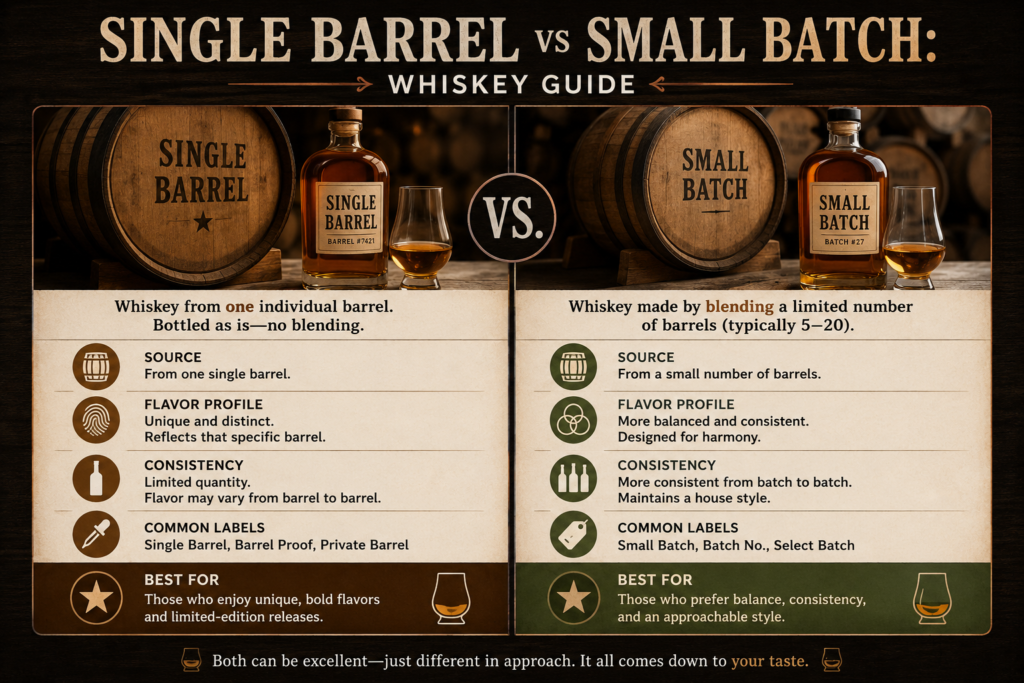
Comparison of Single Barrel vs Small Batch
Whiskey lovers often face a delightful dilemma: single barrel or small batch? Each offers a unique experience.
Single barrel whiskey comes from one specific barrel. This means each bottle has a distinct flavor.
Small batch bourbon, on the other hand, is a blend of select barrels. It aims for a consistent taste.
Understanding these differences can enhance your whiskey journey. It helps in making informed choices.
In this article, we will explore the nuances of single barrel and small batch whiskeys. Discover what sets them apart.
What Are Single Barrel and Small Batch Whiskeys?
Single barrel whiskey is a unique expression of a distillery’s craft. It is sourced from one specific barrel. Each bottle captures the distinct characteristics of its barrel. These whiskeys offer a special touch, making them prized by collectors.
Small batch bourbon takes a different approach. It is crafted by blending a select number of barrels. The aim is consistency and balance in taste. This method provides a reliable flavor profile, batch after batch.
Both styles cater to different preferences among whiskey enthusiasts. They offer diverse tasting experiences. Understanding these differences enhances appreciation of each type.
Here is a concise summary of each style:
- Single Barrel: Sourced from one barrel, unique flavor, often higher proof.
- Small Batch: Blend of barrels, consistent taste, approachable for new drinkers.
In essence, the choice between single barrel and small batch comes down to personal taste. Whether you crave uniqueness or consistency, there’s a whiskey waiting for you.
The Production Process: Single Barrel vs Small Batch
The production of single barrel whiskey is a meticulous process. Each barrel used is chosen for its unique qualities. The final product reflects the individuality of its barrel. This means every batch is distinctly different.
In contrast, small batch bourbon involves blending. Distillers select multiple barrels to combine. The goal is to create a uniform and balanced flavor profile. This blending requires skill and experience to achieve perfection.
Both styles rely heavily on the aging process. Factors like the wood, climate, and time influence the outcome. Each step is critical to the final taste.
Key differences in production:
- Single Barrel: Selection of one specific barrel, diverse taste per batch.
- Small Batch: Blending of selected barrels, consistent flavor across batches.
Importantly, the choice of grain, yeast, and water also plays a role. These elements are crucial in shaping whiskey’s character. Understanding these processes helps appreciate the craftsmanship involved in each type. Both methods showcase the artistry and tradition of whiskey making.
Flavor Profiles and Tasting Experience
Single barrel whiskey offers a unique and often intense tasting experience. Each bottle can differ greatly due to barrel-specific factors. This results in diverse flavors that can include notes of fruit, spice, or smoke. Enthusiasts appreciate this individuality.
Small batch bourbon, on the other hand, aims for consistency. The blending process creates a harmonious balance of flavors. These may include hints of vanilla, caramel, or oak. It’s designed to appeal to a broad audience.
Both styles provide enjoyable tasting experiences but in different ways. Single barrel presents a singular snapshot, while small batch offers reliability. This difference can guide personal preference.
Common flavors in single barrel whiskey:
- Fruity notes
- Smoky undertones
- Spice and pepper hints
Typical flavors in small batch bourbon:
- Vanilla and caramel
- Nutty or buttery notes
- Gentle oak presence

The tasting experience is subjective and varies widely. Factors like palate, mood, and occasion influence perception. Whether you choose single barrel or small batch, exploring these flavors can be a delightful journey. Both styles have unique stories to tell through their taste.
Consistency and Variability in Each Style
The hallmark of single barrel whiskey is its variability. Each barrel ages under unique conditions, creating distinct flavors. As a result, no two bottles are exactly the same. This surprises and excites whiskey connoisseurs.
In contrast, small batch bourbon emphasizes consistency. By blending multiple barrels, distillers aim for a specific taste. This creates a dependable profile, making it appealing for predictable enjoyment. Consistency is key for those who favor reliability.
Both styles offer appealing aspects. Single barrel whiskey’s variability can be adventurous and intriguing. For those who appreciate variety, it’s a great choice. Exploring the different tastes each barrel offers is an enriching experience.
Meanwhile, small batch provides a stable and familiar flavor profile:
- Uniform taste across batches
- Slight variations might exist, but less than single barrel
- Suited for those who favor predictable experiences
The difference between these styles lies in their essence: one is diverse and the other uniform, each with its allure.
Price, Availability, and Exclusivity
Single barrel whiskey often carries a premium price tag. Its limited availability and unique taste drive demand among collectors. This exclusivity makes it a prized possession for enthusiasts.
Conversely, small batch bourbon generally offers more accessible pricing. Its wider distribution contributes to its popularity. Consumers seeking budget-friendly options may find small batch an appealing choice.
The exclusivity of single barrel selections can be alluring for collectors. Limited releases and unique profiles add to their value. These factors enhance their reputation and desirability.
Small batch bourbons are typically more readily available. This allows consumers greater access to consistent, quality whiskey. For many, this balance of quality and affordability is highly attractive.
Key Differences in Price and Availability:
- Single Barrel:
- Higher cost
- Scarce releases
- Collector appeal
- Small Batch:
- Budget-friendly
- Easily found
- Broader reach

Labeling, Transparency, and Legal Definitions
When it comes to whiskey, transparency is crucial. Single barrel whiskeys often showcase detailed labels. These labels may include barrel numbers and bottling dates, ensuring authenticity and traceability.
In contrast, small batch bourbons may not always carry such specific information. However, some do include age statements. These indicate the age of the youngest whiskey in the blend.
It’s essential to note that the term “small batch” lacks a legal definition. This results in variations between distilleries. The number of barrels can differ greatly, affecting the final product.
Considerations for Labeling:
- Single Barrel:
- Detailed labeling
- Barrel and bottling information
- Small Batch:
- Possible age statements
- Variable definitions
Which Should You Choose? Factors to Consider
Choosing between single barrel and small batch whiskey comes down to personal taste and preference. Single barrel offerings provide unique experiences with each bottle, appealing to collectors and connoisseurs who value exclusivity.
On the other hand, small batch bourbons cater to those who seek consistency. Their balanced flavor profiles make them approachable for new whiskey drinkers and versatile for various occasions.
Consider how you plan to enjoy your whiskey. If you’re looking for something to sip and savor, a single barrel might be the perfect choice. Its rarity and unique taste can enhance the experience.
Reasons to Choose Single Barrel:
- Unique flavor profiles
- Limited editions and exclusivity
- Ideal for collectors
For occasions where consistency and balance are desired, small batch bourbons may be preferable. Their expertly crafted blends offer harmonious flavors that suit both personal enjoyment and social gatherings.
Reasons to Choose Small Batch:
- Consistent flavor profiles
- Typically more affordable
- Versatile for cocktails

Popular Brands and Notable Examples
Many brands have established reputations with their excellent single barrel and small batch offerings. These brands are cherished by whiskey enthusiasts worldwide for their distinctive attributes and high quality.
Notable examples of single barrel whiskey include Blanton’s, known for its rich flavors and elegant packaging. For small batch bourbon, Knob Creek and Four Roses Small Batch Reserve stand out for their consistent and balanced flavor profiles.
Notable Brands:
- Blanton’s – Single Barrel
- Knob Creek – Small Batch
- Four Roses Small Batch Reserve
Exploring these brands can provide a deeper appreciation for the craftsmanship involved in both styles. Each brand offers unique expressions that embody the artistry of whiskey making.
Myths and Misconceptions
Several myths surround single barrel and small batch whiskeys. These misconceptions may lead to confusion among consumers.
Common myths include:
- Single barrel is always superior.
- Small batch means fewer barrels.
- Both types are exclusive by definition.
These beliefs can overlook the nuances of production and flavor. Understanding the truth behind these myths can enhance the appreciation of both styles. Each offers unique qualities, but not every assumption holds true universally.
Tips for Tasting and Enjoying Both Styles
Whether you’re new to whiskey or a seasoned enthusiast, tasting different styles can be rewarding. Understanding the flavors can elevate your experience significantly.
To get the most out of your tasting, consider these tips:
- Use a clean glass: A tulip-shaped glass is ideal.
- Observe the color: The hue can hint at age and barrel influence.
- Nose the whiskey: Swirl gently and inhale the aromas.
Taking your time with each sip can unlock a world of complex flavors. Allow the whiskey to linger on your palate, noting any evolving taste sensations. Sharing the experience with friends can also enhance your enjoyment.

Conclusion: Exploring the World of Whiskey
Navigating the world of whiskey offers a delightful journey into nuanced flavors and experiences. Whether you choose the unique character of a single barrel or the balanced notes of a small batch, each sip tells a story.
Embracing these styles adds depth to your appreciation and understanding of whiskey craftsmanship. So, dive into this rich tradition, try different types, and let your tastes guide you through this world.
