
Uncategorized
How to Choose Whiskey Based on Flavor Profile
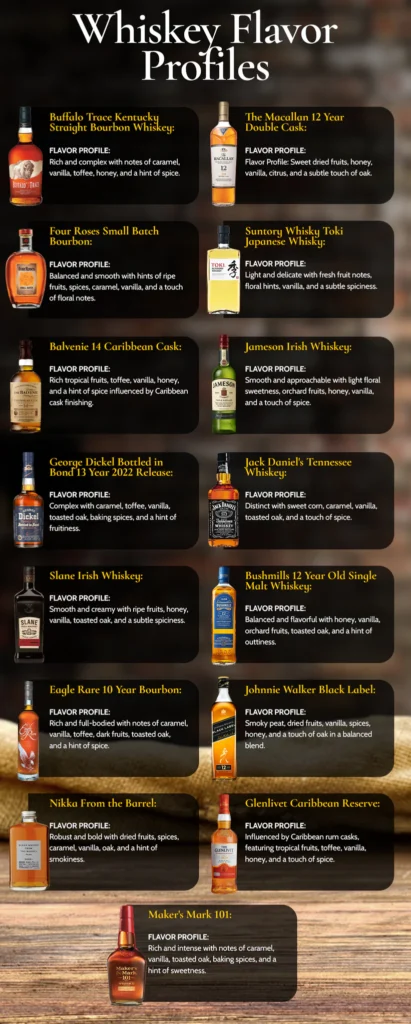
Jan
How to Choose Whiskey Based on Flavor Profile
Choosing whiskey based on flavor profile starts with understanding the core flavor families—sweet, spicy, smoky, and fruity—and knowing which whiskey styles are known for them. By matching these foundational styles to your established taste preferences (like sweet desserts or spicy foods) and learning to decode a label’s clues, you can confidently select a bottle you’ll enjoy. The process is less about price or prestige and more about guided exploration of grain, wood, and production methods.
Navigating a whiskey aisle can be overwhelming. Hundreds of bottles with varying ages, regions, and cryptic descriptions confront you. This guide cuts through the noise, providing a practical, flavor-first framework for selecting your next whiskey.
The Flavor-First Selection Framework
Forget memorizing hundreds of brands. Start by identifying the broad flavor profile you’re naturally drawn to, then find the whiskey styles that deliver it.
Step 1: Identify Your Core Flavor Preference
Think about the foods, drinks, and flavors you already love. This is your best compass.
-
Do you enjoy caramel, vanilla, honey, or maple syrup? → You likely lean toward Sweet & Smooth.
-
Are you a fan of chili pepper, gingerbread, black pepper, or rye bread? → You might prefer Spicy & Robust.
-
Do you love the taste of campfire, smoked meats, leather, or dark chocolate? → You’re probably drawn to Smoky & Peaty.
-
Are you into red berries, orchard fruits, citrus zest, or dried fruit? → Fruity & Complex could be your lane.
Step 2: Match That Preference to a Whiskey Style
Each major whiskey category has a dominant flavor characteristic, rooted in its ingredients and production.
| Your Taste Preference | Recommended Whiskey Style | Why It’s a Match |
|---|---|---|
| Sweet & Smooth | Bourbon, Wheated Bourbon, Tennessee Whiskey | High corn content and new charred oak give classic notes of caramel, vanilla, and toffee. |
| Spicy & Robust | Rye Whiskey, High-Rye Bourbon | A mash bill rich in rye grain delivers peppery, herbal, and baking spice notes. |
| Smoky & Peaty | Single Malt Scotch (Islay), Some American Single Malts | Drying malted barley over peat smoke infuses deep, smoky, medicinal flavors. |
| Fruity & Complex | Irish Single Pot Still, Speyside Scotch, Japanese Whisky | Production methods (e.g., triple distillation, specific yeast strains) and ex-sherry casks promote fruity, clean, and nuanced profiles. |
Step 3: Decode the Label for Flavor Clues
The bottle itself provides data. Look for these key terms:
-
Mash Bill/Grain: “High-rye” means spice. “Wheated” or “corn” suggests sweetness.
-
Region: “Islay” (Scotch) implies smoke. “Speyside” (Scotch) suggests fruit and malt.
-
Cask Type: “Ex-Bourbon Barrel” often gives vanilla, coconut. “Ex-Sherry Cask” adds dried fruit, nuts, and spice.
-
Age Statement: While not a direct flavor indicator, longer aging typically means more oak influence (vanilla, tannin, spice).
A Deep Dive into Flavor Profiles & Whiskey Styles
Let’s explore each major profile with specific bottle examples for beginners and enthusiasts.
Profile 1: Sweet & Smooth Whiskies
This profile is the most approachable for beginners, characterized by dessert-like notes.
Primary Styles:
-
Bourbon: Legal requirement of ≥51% corn creates a natural sweetness. Look for Maker’s Mark (wheated, soft) or Evan Williams Single Barrel for classic vanilla and caramel.
-
Tennessee Whiskey: Charcoal mellowing (Lincoln County Process) adds a layer of smoothness. Jack Daniel’s Old No. 7 is the quintessential example, with notes of banana, maple, and oak.
Tasting Notes to Expect: Caramel, vanilla, butterscotch, honey, milk chocolate, toasted oak, brown sugar.
Profile 2: Spicy & Robust Whiskies
These whiskies have a bold, often dry, and gripping character that stands up well in cocktails.
Primary Styles:
-
Rye Whiskey (American): Must be ≥51% rye. Tastes of rye spice, herbal notes, and often a dry finish. Bulleit 95 Rye or Rittenhouse Rye Bottled-in-Bond offer excellent peppery, citrusy spice.
-
High-Rye Bourbon: A bourbon with a significant rye portion (15-35%). Four Roses Single Barrel or Old Grand-Dad Bonded deliver sweet corn base layered with cinnamon and pepper.
Tasting Notes to Expect: Black pepper, baking spices (cinnamon, nutmeg), dill, anise, herbal tea, dark fruit.
Profile 3: Smoky & Peaty Whiskies
This is the most polarizing and distinctive profile, directly tied to the use of peat in malting.
Primary Styles:
-
Islay Single Malt Scotch: The epicenter of peat. Ranges from medicinal to briny to sweetly smoky. Lagavulin 16 Year offers intense peat smoke with a sherry-cask sweetness, while Laphroaig 10 Year is known for its bold, medicinal, seaweed-like character.
-
Some American Single Malts: Distilleries like Westland in Washington or St. George Spirits in California use local peat, creating a different, often earthier style of smoke.
Tasting Notes to Expect: Campfire, tar, iodine, brine, smoked meat, leather, dark chocolate, espresso.
Profile 4: Fruity & Complex Whiskies
These whiskies emphasize elegance, balance, and layered fruit notes, often with less overt sweetness or smoke.
Primary Styles:
-
Irish Whiskey (Pot Still or Triple-Distilled): Often remarkably smooth and fruity. Redbreast 12 Year (Single Pot Still) is a benchmark, with flavors of ripe green apple, pear, sherry nuttiness, and spice.
-
Speyside Single Malt Scotch: Known for elegance and fruitiness. The Glenlivet 12 Year or Glenfiddich 12 Year offer classic notes of pear, apple, honey, and floral malt.
-
Japanese Whisky: Often stylistically similar to Scotch but with a heightened sense of balance and delicate, nuanced fruit. Nikka Coffey Grain is a highly accessible example with lush tropical fruit and vanilla notes.
Tasting Notes to Expect: Green apple, pear, citrus zest, stone fruit, raisin, fig, floral honey, toasted almond.
Practical Application: Real-World Selection Scenarios
Scenario 1: “I love a good Old Fashioned cocktail.”
-
Flavor Logic: You need a whiskey with enough spice and structure to stand up to sugar and bitters.
-
Choose: A High-Rye Bourbon (like Old Forester 100 Proof) or a straight Rye Whiskey (like Sazerac Rye). Their spice complements the cocktail’s ingredients perfectly.
Scenario 2: “I want a whiskey to sip slowly after dinner, like a digestif.”
-
Flavor Logic: You want something rich, contemplative, and perhaps a bit sweet to pair with the end of a meal.
-
Choose: A sherry-cask finished whiskey (like GlenDronach 12 Year Scotch) or a richer, older bourbon (like Elijah Craig Small Batch). The deeper fruit and oak notes suit the occasion.
Scenario 3: “I’m a wine drinker looking to explore whiskey.”
-
Flavor Logic: Your palate is tuned to nuance, acidity, and fruit.
-
Choose: Start with an Irish Single Pot Still (fruity, smooth) or a Speyside Scotch (elegant, malty). They offer a more familiar bridge than intensely smoky or sweet profiles.
Key Takeaways: Your Whiskey Selection Cheat Sheet
-
Follow Your Palate: Your existing food and drink preferences are the best guide to your whiskey taste.
-
Know the Style Map: Sweet → Bourbon/Tennessee. Spicy → Rye. Smoky → Islay Scotch. Fruity → Irish/Speyside.
-
Read the Label for Clues: Words like “high-rye,” “ex-sherry cask,” or “Islay” directly point to flavor.
-
Start with Classics: Each profile has 1-2 benchmark bottles (e.g., Maker’s Mark for sweet, Bulleit Rye for spicy) that define the style reliably.
-
Taste is Personal: There are no “right” answers, only informed starting points for your own exploration.
Frequently Asked Questions (FAQ)
What’s the biggest mistake beginners make when choosing whiskey?
They choose based on age or price alone, not flavor profile. An older or more expensive whiskey in a style you dislike (e.g., a smoky Islay) will not be enjoyable, while a well-chosen, affordable bottle in your preferred profile will be a delight.
How important is the “neat vs. rocks” tasting method when selecting?
Crucial. Always try a new whiskey neat first, with a few drops of water if needed. This lets you assess its true character. Ice numbs the palate and melts quickly, dramatically altering the flavor and making fair comparison difficult.
Does the glassware really matter for tasting?
Yes. A Glencairn glass or a similar tulip-shaped glass concentrates aromas at the rim, directing them to your nose. Drinking a fine whiskey from a lowball or rocks glass mutes its aromatic complexity, much like drinking wine from a coffee mug.
Can I rely on flavor “wheels” or distillery tasting notes?
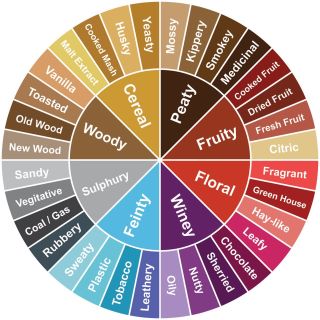
Use them as a guide, not a guarantee. Tasting notes are subjective. A wheel can help you put words to what you’re smelling, but your own perception is what matters most. Two people may taste the same whiskey differently.
How do I explore outside my comfort zone without wasting money?
Visit a well-stocked whiskey bar, attend tastings, or split bottles with friends. Order a 1oz pour of a style adjacent to your preference (e.g., if you like sweet bourbon, try a fruity Irish whiskey next). This is a low-risk, high-reward strategy.
Is “single barrel” always better than “blended”?
No. “Single barrel” means unique, individual character, which can be amazing or slightly off-profile. “Blended” (especially in Scotch) means the master distiller’s skill in creating perfect, batch-to-batch consistency. Both can be exceptional; they are different philosophies.
Choosing whiskey is a journey of personal discovery, not a test of expertise. By using your innate flavor preferences as a compass and understanding the map of whiskey styles, you transform a confusing choice into an exciting exploration. The goal isn’t to find the “best” whiskey in an absolute sense, but to find the best whiskey for you in any given moment—whether that’s a comforting sweet bourbon, a challenging peaty Scotch, or a versatile spicy rye.
Trust your palate, start with the classic examples in your preferred profile, and branch out gradually. Each bottle tells a story of grain, wood, time, and place. Your role is simply to be the curious reader. With this framework in hand, you are equipped to select, taste, and appreciate with confidence. Cheers to your next great find.
